
About Assessment

I offer personalized assessments for children and adolescents, with the goal of understanding their unique needs and abilities.
Through a holistic approach, I evaluate motor development, cognitive and executive functions, sensory processing, developmental play stages, social interaction skills, and overall daily functioning.

My Approach

I also look at how each child responds to the roles and tasks they face at home, at school, and in other environments.

Assessment

The purpose of the assessment is to design a tailored intervention plan that builds on each child’s strengths, supports their abilities, and promotes independence and well-being — helping them lead a fulfilling and meaningful life

Therapy

About Therapy

Following each child’s assessment, I create a personalized intervention plan based on their specific needs, skills, and potential.

The therapeutic process is founded on close collaboration with families, teachers, other health professionals, and everyone involved in the child’s daily life. This teamwork is a vital part of every successful therapy journey.

In addition to traditional settings, therapy also takes place in real-life environments such as the home, school, park, supermarket, or shopping center — helping children generalize and apply their skills across different situations.

My Approach

I believe that real progress happens when a child develops skills they can confidently use in every aspect of daily life, supporting their smooth and active social inclusion.

Above all, my priority is to help every child discover their own unique and wonderful self — to recognize their worth and experience the power of creativity and love.
Every child has the potential to achieve amazing things — all they need is the right space, time, and support.

Therapy

My goal is to provide high-quality occupational therapy guided by a holistic approach that enhances functionality, independence, autonomy, and active participation in everyday activities and life’s challenges

Feeding Interventions

About Feeding Interventions

SOS Approach to Feeding approach takes into account developmental, sensory, motor, behavioral, medical, and emotional factors, offering a personalized and structured path toward accepting new foods.

Feeding is a complex process that involves 32 steps, from tolerating the presence of a new food, to interacting with it (seeing it, smelling it, touching it, licking it, spitting it out), and finally chewing and swallowing it.
It is a gradual and multidimensional journey, where the child is encouraged to explore new foods without pressure or stress, but in a friendly, playful, and safe environment.

My Approach

Through this supportive process, we not only improve the variety and quality of a child’s diet but also foster a positive relationship with food, built on trust and a sense of safety.
One of the main goals of feeding therapy is to strengthen the connection between the child and their parent or caregiver by creating an environment of care, cooperation, and emotional security around mealtime.

Collaboration and communication with schools, other health professionals, and the wider family are essential to ensure a consistent, safe, and supportive feeding experience.
In this way, food becomes more than nourishment — it becomes an opportunity for connection, communication, socialization, and growth with loved ones.

Feeding Interventions

In my occupational therapy practice, I provide specialized feeding therapy based on the SOS Approach to Feeding — an internationally recognized, evidence-based, and multidisciplinary method designed to support children with feeding challenges.

Therapeutic Listening

About Therapeutic Listening

In my practice, I harness the power and richness of music to offer children opportunities for development, interaction, and communication.

It is suitable for individuals of all ages and aims to regulate sensory processing, support emotional organization, and improve concentration, communication, and motor function.

My Approach

This approach involves listening to specially designed music through dedicated headphones. The recordings contain selected frequencies and sound characteristics that help regulate and organize the nervous system, enhancing the child’s overall functioning in daily life.

Because every child is unique, each Therapeutic Listening program is carefully designed and adjusted according to their sensory and developmental profile, as well as their individual goals. It can be incorporated into personalized occupational therapy sessions or used in different environments such as home or school.

Therapeutic Listening

Therapeutic Listening® is a globally recognized, specialized approach based on the principles of sensory integration and neurodevelopment

Dysgraphia Intervention

About Dysgraphia Intervention

Through occupational therapy assessment and intervention, I identify each child’s specific needs and design a customized program aimed at improving fine motor skills, visual-motor coordination, and posture during writing.

My Approach

Addressing dysgraphia requires a collaborative approach that includes the child, their family, teachers, and — when necessary — other health professionals.
Together with parents and educators, we develop shared strategies that support the child both at school and at home, helping them transfer the skills learned in therapy to everyday life.

The goal is not only to improve handwriting but also to build the child’s confidence and overall academic success.
With understanding, consistency, and professional guidance, every child can gain the tools they need for a more functional, confident, and enjoyable learning experience.

Dysgraphia Intervention

Graphomotor skills form the foundation of learning and academic development. Many children face challenges in developing fluent and functional handwriting — often due to dysgraphia, a neurodevelopmental difficulty that affects handwriting fluency, form, and legibility.

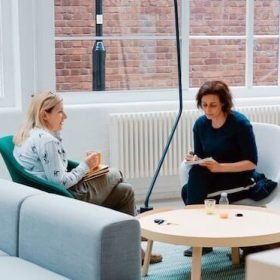
My Approach

How it Works?

Step 1

Getting to Know the Child

We begin with an in-depth assessment designed to understand each child’s unique abilities, needs, and daily challenges.
Through play-based and evidence-based tools, we explore areas such as motor skills, sensory processing, emotional regulation, and social interaction — forming a complete picture of their developmental profile.

step1-img
step2-img

Step 2

Creating a Personalized Plan

Together with the family, we design an individualized therapy plan focused on each child’s goals, interests, and strengths.
This plan integrates evidence-based approaches such as sensory integration, functional skill development, and the SOS Feeding Method — always tailored to the child’s pace and needs.

Step 3

Building Skills Through Meaningful Activities

Therapy sessions are engaging, purposeful, and adapted to real-life situations — at the clinic, home, school, or community settings.
We work on developing essential life skills, from feeding and play to handwriting and emotional regulation, helping the child gain confidence and independence in daily life.

step1-img
step2-img

Step 4

Family Collaboration and Growth

Families are at the heart of the therapeutic process. Through regular communication, shared strategies, and ongoing support, we ensure that skills learned in therapy are carried into everyday routines.
Together, we celebrate every milestone and every step forward.

Step 5

Continuous Support and Adaptation

As the child grows and their needs evolve, so does the therapy plan.
We continuously monitor progress and adapt goals to ensure that development remains dynamic, positive, and meaningful.

step1-img

Get in Touch

Let’s talk about your child’s needs and how we can work together to support their development.